Aug 21, 2026
Why the Architect of the Apple Store Hired Baristas and Killed Commissions
Based on Ron Johnson’s appearance on the Strategy and Leadership Podcast with Anthony Taylor.
Today, the Apple Store is one of the most studied retail concepts in business history. Yet when Ron Johnson—the retail executive behind Target’s design-led renaissance and Apple’s brick-and-mortar launch—first pitched the blueprint, almost every decision looked dead wrong by traditional retail standards.
On the Strategy and Leadership Podcast, Johnson broke down the unconventional bets that made Apple Retail work—and why they still hold lessons for leaders in any industry.
1. Hire for Empathy, Train for Expertise
When the first Apple Stores opened, Apple only had four core products to sell, and the average shopper visited four or five times before purchasing a computer. Traditional electronics retailers staffed their floors with hardcore tech specs experts. Johnson went the opposite direction: he recruited baristas, librarians, and hospitality workers. His bet was simple: it is far easier to teach a warm, naturally curious people-person how to use a Mac than it is to teach a computer engineer how to connect with a nervous first-time buyer.
2. Eliminate Sales Commissions
Most electronics stores ran on aggressive sales commissions, creating high-pressure environments where staff pushed high-margin accessories. Johnson banned commissions entirely. Because customers rarely complain about getting too much help—they complain about not getting enough help—removing commissions aligned employees with the customer’s timeline rather than a weekly quota.
3. Use Store Architecture as a Strategic Message
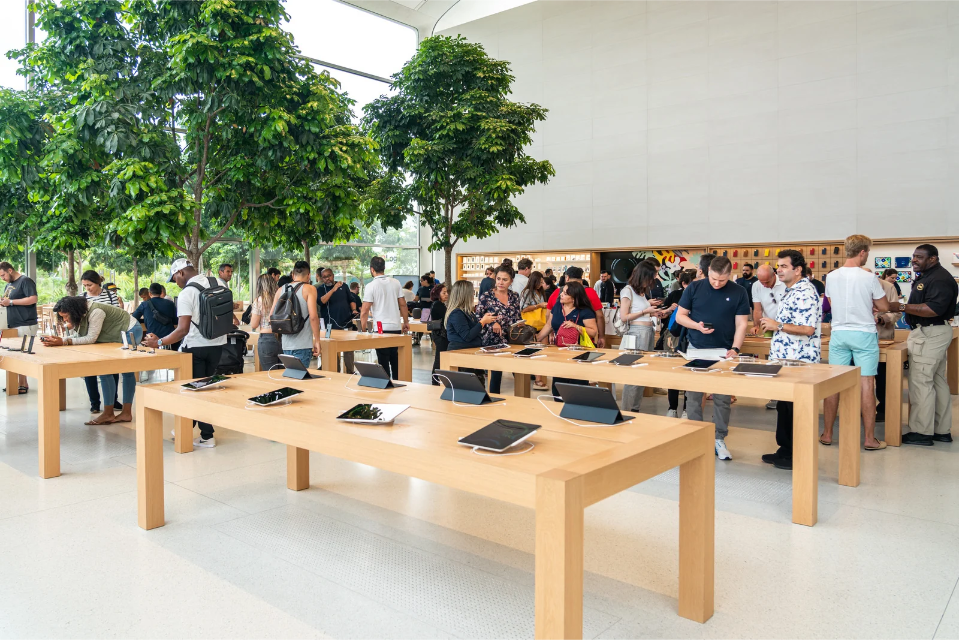
Apple’s minimalist store layout wasn’t just about aesthetics; it was designed for instant psychological clarity. The moment a shopper walked through the door, they could take in the entire room at a glance: hands-on products up front, and support spaces (the Genius Bar, workshop theater, and kids’ table) clearly visible in the back. Before a single word was spoken, the layout communicated a clear promise: We are here to support you long after you buy, not just take your money today.
4. Turn Real Estate Constraints into Margin Advantage
One of Johnson’s boldest financial plays was the iconic Fifth Avenue flagship in New York City. Prime street-level rent on Fifth Avenue typically eats up around 10% of a retailer’s revenue. By placing the actual store underground beneath a minimalist glass cube entrance, Apple secured basement-level real estate priced closer to a parking garage. Rent came in under 1% of the store’s $350 million first-year sales—adding roughly nine percentage points straight to the bottom line.
5. Treat Physical and Digital as One Ecosystem
Despite decades of predictions that e-commerce would wipe out physical retail, Johnson points out that roughly 85% of retail purchases still happen either in physical stores or on a retailer’s own website. Shoppers constantly bounce between researching online and buying in person—or vice versa. The winners in modern retail, Johnson notes, aren’t picking sides between digital and physical; they’re building a seamless system where both channels reinforce each other.
You can also watch the full conversation from the second podcast in The Apple Store Architect on Hiring Baristas, Killing Commissions, and Inventing the Genius Bar, which expands on these exact hiring and store-design decisions.
Interested in Ron Johnson’s fees and availability for your upcoming event? Email info@bigspeak.com to inquire about booking.
Speaker
 Ron Johnson